Whether delivered online or in person, our instructor-led Computer Vision training programs guide you through an interactive and hands-on journey. Participants explore the fundamentals by building simple Computer Vision applications, blending discussion with practical experience to solidify core concepts.
You can choose between "online live training" or "onsite live training." Online live training, also known as remote live training, is conducted via an interactive remote desktop session. Onsite live training takes place either directly on your customer premises in Plovdiv or at NobleProg’s corporate training centers located in Plovdiv.
NobleProg -- Your Local Training Provider
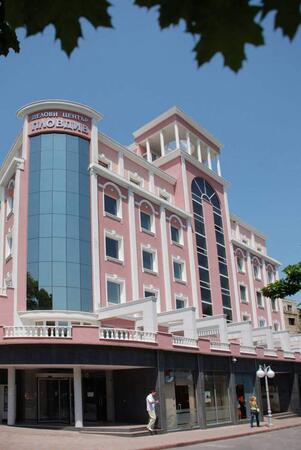
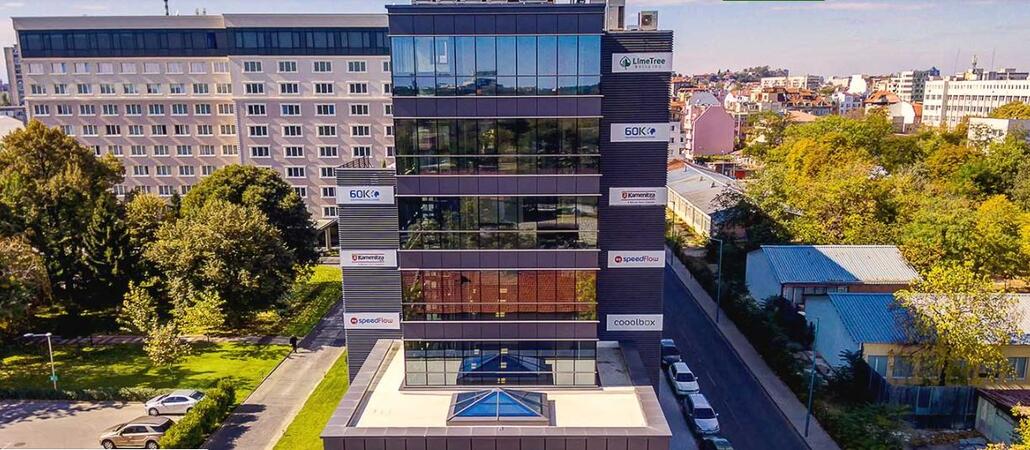
Business Center Plovdiv
Han Kubrat St 1, Plovdiv, Bulgaria, 4017
This is the most modern business center in the city, with all the necessary functionalities, while being located in a green part of the city.
It is about 20 minutes by bus from the main train station as well as the city center.
This instructor-led, live training in Plovdiv (online or onsite) targets intermediate to advanced computer vision engineers, AI developers, and IoT professionals who wish to implement and optimize computer vision models for real-time processing on edge devices.
Upon completing this training, participants will be able to:
Grasp the fundamentals of Edge AI and its applications in computer vision.
Deploy optimized deep learning models on edge devices for real-time image and video analysis.
Utilize frameworks such as TensorFlow Lite, OpenVINO, and NVIDIA Jetson SDK for model deployment.
Optimize AI models for performance, power efficiency, and low-latency inference.
This live, instructor-led training in Plovdiv (online or onsite) is aimed at experienced professionals who wish to deepen their understanding of computer vision and explore TensorFlow's capabilities for developing sophisticated vision models using Google Colab.
By the end of this training, participants will be able to:
Build and train convolutional neural networks (CNNs) using TensorFlow.
Leverage Google Colab for scalable and efficient cloud-based model development.
Implement image preprocessing techniques for computer vision tasks.
Deploy computer vision models for real-world applications.
Use transfer learning to enhance the performance of CNN models.
Visualize and interpret the results of image classification models.
This instructor-led training on Plovdiv focuses on deploying and optimizing CV and NLP models using the CANN SDK for Ascend hardware. Learners will master model conversion, integration into live pipelines, and enhancing inference performance for real-time detection and analysis.
This instructor-led, live training in Plovdiv (online or onsite) is aimed at intermediate-level AI developers and computer vision engineers who wish to build robust vision systems for autonomous driving applications.
By the end of this training, participants will be able to:
Understand the fundamental concepts of computer vision in autonomous vehicles.
Implement algorithms for object detection, lane detection, and semantic segmentation.
Integrate vision systems with other autonomous vehicle subsystems.
Apply deep learning techniques for advanced perception tasks.
Evaluate the performance of computer vision models in real-world scenarios.
This instructor-led, live training in Plovdiv (online or onsite) is aimed at beginner-level law enforcement personnel who wish to transition from manual facial sketching to using AI tools for developing facial recognition systems.
By the end of this training, participants will be able to:
Understand the fundamentals of Artificial Intelligence and Machine Learning.
Learn the basics of digital image processing and its application in facial recognition.
Develop skills in using AI tools and frameworks to create facial recognition models.
Gain hands-on experience in creating, training, and testing facial recognition systems.
Understand ethical considerations and best practices in the use of facial recognition technology.
This hands-on training in Plovdiv covers Fiji and ImageJ fundamentals for biological research. Learners gain practical skills in image preprocessing, quantitative analysis, and macro automation to streamline workflows for histological tissues, cells, and other samples with reproducible results.
This guided, live training session Plovdiv (online or in-person) targets intermediate-level professionals aiming to leverage Vision Builder AI to design, implement, and refine automated inspection systems for SMT (Surface-Mount Technology) processes.
Upon completion of this training, participants will be capable of:
Establishing and configuring automated inspections using Vision Builder AI.
Acquiring and preprocessing high-quality images for analysis.
Implementing logic-based decision-making for defect detection and process validation.
Generating inspection reports and optimizing system performance.
This live, instructor-guided training in Plovdiv, offered online or on-site, targets intermediate to advanced developers, researchers, and data scientists seeking to implement real-time object detection with YOLOv7.
By the end of the session, participants will be capable of:
Comprehending the essential concepts of object detection.
Installing and configuring YOLOv7 for detection workflows.
Training and testing custom models with YOLOv7.
Integrating YOLOv7 with other computer vision tools and frameworks.
Resolving common implementation issues associated with YOLOv7.
Explore the fundamentals of Computer Vision through this hands-on, instructor-led training in Plovdiv. Participants will leverage Python to construct face, object, and motion detection systems, gaining a practical foundation in image processing and core Computer Vision tasks.
Online Computer Vision training in Plovdiv, training courses in Plovdiv, Weekend Computer Vision courses in Plovdiv, Evening training in Plovdiv, Computer Vision instructor-led in Plovdiv, classes in Plovdiv, Computer Vision coaching in Plovdiv, Evening Computer Vision courses in Plovdiv, Online training in Plovdiv, Computer Vision trainer in Plovdiv, on-site in Plovdiv, instructor-led in Plovdiv, Weekend training in Plovdiv, Computer Vision one on one training in Plovdiv, Computer Vision boot camp in Plovdiv, Computer Vision instructor in Plovdiv, private courses in Plovdiv