Instructor-led live Machine Learning (ML) training courses, available both online and onsite, use hands-on practice to show how to apply machine learning techniques and tools to solve real-world problems across various industries. NobleProg ML courses cover different programming languages and frameworks, including Python, R language and Matlab. Machine Learning courses are offered for a number of industry applications, including Finance, Banking and Insurance and cover the fundamentals of Machine Learning as well as more advanced approaches such as Deep Learning.
Machine Learning training is available as "online live training" or "onsite live training". Online live training (aka "remote live training") is carried out by way of an interactive, remote desktop. Onsite live Machine Learning trainings in Plovdiv can be carried out locally on customer premises or in NobleProg corporate training centers.
NobleProg -- Your Local Training Provider
Business Center Plovdiv
Han Kubrat St 1, Plovdiv, Bulgaria, 4017
This is the most modern business center in the city, with all the necessary functionalities, while being located in a green part of the city.
It is about 20 minutes by bus from the main train station as well as the city center.
This instructor-led, live training in Plovdiv (online or onsite) is aimed at beginner-level professionals who wish to understand the concept of pre-trained models and learn how to apply them to solve real-world problems without building models from scratch.
By the end of this training, participants will be able to:
Understand the concept and benefits of pre-trained models.
Explore various pre-trained model architectures and their use cases.
Fine-tune a pre-trained model for specific tasks.
Implement pre-trained models in simple machine learning projects.
This instructor-led, live training in Plovdiv (online or onsite) is aimed at participants with varying levels of expertise who wish to leverage Google's AutoML platform to build customized chatbots for various applications.
By the end of this training, participants will be able to:
Understand the fundamentals of chatbot development.
Navigate the Google Cloud Platform and access AutoML.
Prepare data for training chatbot models.
Train and evaluate custom chatbot models using AutoML.
Deploy and integrate chatbots into various platforms and channels.
Monitor and optimize chatbot performance over time.
This instructor-led, live training in Plovdiv (online or onsite) is tailored for intermediate-level AI developers, machine learning engineers, and system architects who seek to optimize AI models for edge deployment.
Upon completion of this training, participants will be able to:
Comprehend the challenges and requirements associated with deploying AI models on edge devices.
Apply model compression techniques to decrease the size and complexity of AI models.
Leverage quantization methods to boost model efficiency on edge hardware.
Implement pruning and additional optimization techniques to enhance model performance.
Deploy optimized AI models across various edge devices.
This instructor-led, live training conducted in Plovdiv (online or onsite) is tailored for intermediate-level developers, data scientists, and tech enthusiasts aiming to acquire practical skills in deploying AI models on edge devices for diverse applications.
By the conclusion of this training, participants will be able to:
Understand the principles of Edge AI and its benefits.
Set up and configure the edge computing environment.
Develop, train, and optimize AI models for edge deployment.
Implement practical AI solutions on edge devices.
Evaluate and improve the performance of edge-deployed models.
Address ethical and security considerations in Edge AI applications.
This instructor-led, live training in Plovdiv (online or onsite) is aimed at advanced-level AI engineers and data scientists with intermediate-to-advanced experience who wish to enhance DeepSeek model performance, minimize latency, and deploy AI solutions efficiently using modern MLOps practices.
By the end of this training, participants will be able to:
Optimize DeepSeek models for efficiency, accuracy, and scalability.
Implement best practices for MLOps and model versioning.
Deploy DeepSeek models on cloud and on-premise infrastructure.
Monitor, maintain, and scale AI solutions effectively.
MLOps on Kubernetes serves as a framework for automating the training, validation, packaging, and deployment of machine learning models through containerized pipelines and GitOps workflows.
This instructor-led live training (available online or onsite) targets intermediate-level practitioners looking to construct automated, scalable MLOps pipelines on Kubernetes.
Upon completion of this training, participants will be capable of:
Designing end-to-end CI/CD pipelines for machine learning.
Implementing GitOps workflows for model deployment and versioning.
Automating the training, testing, and packaging of ML models.
Integrating monitoring, alerting, and rollback strategies.
Course Format
Instructor-guided presentations and technical deep dives.
Hands-on exercises that build real-world CI/CD workflows.
Live-lab practice deploying ML workloads to Kubernetes.
Course Customization Options
Organizations may request tailored content aligned with their internal MLOps tools and infrastructure.
Kubeflow is an open-source platform designed to streamline building, training, and deploying machine learning workloads on Kubernetes.
This instructor-led, live training (online or onsite) is aimed at beginner-level to intermediate-level professionals who wish to build reliable ML workflows using Kubeflow.
Upon completion of this training, attendees will gain the skills to:
Navigate the Kubeflow ecosystem and core components.
Build reproducible workflows with Kubeflow Pipelines.
Run scalable training jobs on Kubernetes.
Serve machine learning models efficiently using Kubeflow Serving.
Format of the Course
Guided presentations and collaborative discussions.
Hands-on labs with real Kubeflow components.
Practical exercises to build end-to-end ML workflows.
Course Customization Options
Customized versions of this training can be arranged to align with your team’s technology stack and project requirements.
This instructor-led live training, available online or onsite, targets advanced technical professionals who want to design, optimize, and deploy comprehensive TinyML pipelines.
Upon completing this training, participants will be able to:
Gather, prepare, and manage datasets tailored for TinyML applications.
Train and optimize models specifically for low-power microcontrollers.
Transform models into lightweight formats ideal for edge devices.
Deploy, test, and monitor TinyML applications on actual hardware.
Course Format
Instructor-led lectures combined with technical discussions.
Practical laboratory exercises and iterative experimentation.
Hands-on deployment on microcontroller-based platforms.
Customization Options
To tailor the training to specific toolchains, hardware boards, or internal workflows, please contact us to arrange a customized session.
This instructor-led, live training in Plovdiv (online or onsite) is aimed at intermediate-level developers, data scientists, and AI practitioners who wish to leverage TensorFlow Lite for Edge AI applications.
By the end of this training, participants will be able to:
Understand the fundamentals of TensorFlow Lite and its role in Edge AI.
Develop and optimize AI models using TensorFlow Lite.
Deploy TensorFlow Lite models on various edge devices.
Utilize tools and techniques for model conversion and optimization.
Implement practical Edge AI applications using TensorFlow Lite.
This instructor-led, live training in Plovdiv (online or onsite) is designed for advanced professionals seeking to master the technologies underlying autonomous systems.
Upon completion of this training, participants will be able to:
Design and implement AI models for autonomous decision-making.
Develop control algorithms for autonomous navigation and obstacle avoidance.
Ensure safety and reliability in AI-powered autonomous systems.
Integrate autonomous systems with existing robotics and AI frameworks.
This live, instructor-led training in Plovdiv (online or onsite) is aimed at experienced professionals who wish to deepen their understanding of computer vision and explore TensorFlow's capabilities for developing sophisticated vision models using Google Colab.
By the end of this training, participants will be able to:
Build and train convolutional neural networks (CNNs) using TensorFlow.
Leverage Google Colab for scalable and efficient cloud-based model development.
Implement image preprocessing techniques for computer vision tasks.
Deploy computer vision models for real-world applications.
Use transfer learning to enhance the performance of CNN models.
Visualize and interpret the results of image classification models.
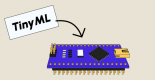
TinyML refers to the deployment of machine learning models on low-power, resource-constrained devices operating at the network edge.
This instructor-led live training (available online or onsite) is designed for advanced professionals seeking to secure TinyML pipelines and implement privacy-preserving techniques in edge AI applications.
Upon completion of this course, participants will be able to:
Identify security risks specific to on-device TinyML inference.
Implement privacy-preserving mechanisms for edge AI deployments.
Harden TinyML models and embedded systems against adversarial threats.
Apply best practices for secure data handling in constrained environments.
Format of the Course
Engaging lectures supported by expert-led discussions.
This instructor-led live training in Plovdiv (online or onsite) is designed for advanced professionals who wish to deepen their knowledge of machine learning models, improve their hyperparameter tuning skills, and learn how to effectively deploy models using Google Colab.
By the end of this training, participants will be able to:
Implement advanced machine learning models using popular frameworks like Scikit-learn and TensorFlow.
Optimize model performance through hyperparameter tuning.
Deploy machine learning models in real-world applications using Google Colab.
Collaborate and manage large-scale machine learning projects in Google Colab.
This instructor-led live training in Plovdiv (online or onsite) is aimed at intermediate-level professionals who wish to apply AI techniques to optimize yield management in semiconductor manufacturing.
By the end of this training, participants will be able to:
Analyze production data to identify factors affecting yield rates.
Implement AI algorithms to enhance yield management processes.
Optimize production parameters to reduce defects and improve yields.
Integrate AI-driven yield management into existing production workflows.
This instructor-led, live training in Plovdiv (online or onsite) targets intermediate-level business and AI professionals who wish to apply machine learning in business, forecasting, and AI-driven systems using real case studies and Python-based tools.
Upon completion of this training, participants will be able to:
Grasp how machine learning integrates with AI and business strategy.
Apply supervised and unsupervised learning techniques to solve structured business problems.
Preprocess and transform data for modeling purposes.
Utilize neural networks for classification and prediction tasks.
Conduct sales forecasting using both statistical and ML-based methods.
Implement clustering and association rule mining for customer segmentation and pattern discovery.
This instructor-led, live training in Plovdiv (online or onsite) is aimed at intermediate-level professionals who wish to apply AI-driven predictive maintenance techniques in semiconductor manufacturing to enhance production efficiency and reduce unexpected equipment failures.
By the end of this training, participants will be able to:
Implement AI models for predicting equipment failures in semiconductor manufacturing.
Analyze maintenance data to identify patterns and trends indicative of potential issues.
Integrate AI-driven predictive maintenance into existing manufacturing workflows.
Reduce downtime and maintenance costs through proactive equipment management.
This instructor-led, live training in Plovdiv (online or onsite) targets advanced professionals seeking to apply state-of-the-art AI techniques to semiconductor design automation, thereby enhancing efficiency, accuracy, and innovation in chip design and verification.
Upon completion of this training, participants will be equipped to:
Utilize advanced AI techniques to optimize semiconductor design workflows.
Integrate machine learning models into EDA tools to improve design verification.
Create AI-powered solutions for complex design challenges in chip fabrication.
Harness neural networks to boost the speed and accuracy of design automation.
This instructor-led, live training in Plovdiv (online or onsite) is aimed at intermediate-level data scientists and developers who wish to understand and apply deep learning techniques using the Google Colab environment.
By the end of this training, participants will be able to:
Set up and navigate Google Colab for deep learning projects.
Understand the fundamentals of neural networks.
Implement deep learning models using TensorFlow.
Train and evaluate deep learning models.
Utilize advanced features of TensorFlow for deep learning.
This instructor-led, live training in Plovdiv (online or on-site) is designed for intermediate-level professionals seeking to understand and apply AI techniques for optimizing semiconductor fabrication processes.
By the conclusion of this training, participants will be capable of:
Understanding AI methodologies for process optimization in chip fabrication.
Implementing AI models to enhance yield and reduce defects.
Analyzing process data to identify key parameters for optimization.
Applying machine learning techniques to fine-tune semiconductor manufacturing processes.
This instructor-led live training, delivered Plovdiv (online or onsite), is designed for intermediate-level participants who wish to automate and manage machine learning workflows. The curriculum covers model training, validation, and deployment using Apache Airflow.
Upon completion of this training, participants will be equipped to:
Configure Apache Airflow specifically for orchestrating machine learning workflows.
Automate essential tasks such as data preprocessing, model training, and validation.
Seamlessly integrate Airflow with various machine learning frameworks and tools.
Deploy machine learning models through the use of automated pipelines.
Monitor and optimize machine learning workflows within production environments.
This instructor-led, live training in Plovdiv (online or onsite) is designed for intermediate-level data scientists and developers who want to efficiently apply machine learning algorithms using the Google Colab environment.
By the end of this training, participants will be able to:
Set up and navigate Google Colab for machine learning projects.
Understand and apply various machine learning algorithms.
Use libraries like Scikit-learn to analyze and predict data.
Implement supervised and unsupervised learning models.
Optimize and evaluate machine learning models effectively.
TinyML involves the deployment of machine learning models on hardware with severely limited resources.
This instructor-led live training, available online or onsite, is designed for advanced practitioners seeking to optimize TinyML models for low-latency, memory-efficient deployment on embedded devices.
Upon completing this training, participants will be able to:
Utilize quantization, pruning, and compression techniques to minimize model size while preserving accuracy.
Benchmark TinyML models for latency, memory usage, and energy efficiency.
Implement optimized inference pipelines on microcontrollers and edge devices.
Assess the trade-offs between performance, accuracy, and hardware limitations.
Course Format
Instructor-led presentations complemented by technical demonstrations.
Practical optimization exercises and comparative performance testing.
Hands-on implementation of TinyML pipelines within a controlled lab environment.
Course Customization Options
For customized training aligned with specific hardware platforms or internal workflows, please contact us to tailor the program.
This instructor-led, live training in Plovdiv (online or onsite) is designed for advanced professionals who wish to explore state-of-the-art XAI techniques for deep learning models, focusing on the development of interpretable AI systems.
Upon completion of this training, participants will be able to:
Grasp the challenges associated with explainability in deep learning.
Apply advanced XAI techniques to neural networks.
Interpret the decisions generated by deep learning models.
Assess the balance between model performance and transparency.
This instructor-led, live training in Plovdiv (online or onsite) is designed for professional beginners who want to comprehend and apply AI technologies within the semiconductor manufacturing industry.
Upon completing this training, participants will be capable of:
Grasping the fundamental principles of AI and their application in semiconductor manufacturing.
Pinpointing specific areas in semiconductor manufacturing where AI can be effectively utilized.
Employing AI tools and techniques to improve production efficiency and quality assurance.
Deploying basic AI models to streamline manufacturing operations.
Docker serves as a containerization platform designed to create reproducible, portable, and scalable environments for machine learning systems.
This instructor-led live training, available online or on-site, targets technical professionals at intermediate to advanced levels who aim to containerize and operationalize complete ML pipelines using Docker.
Upon completing this course, participants will be able to:
Containerize ML workloads for training, validation, and inference.
Design and orchestrate end-to-end ML pipelines using Docker and complementary tools.
Implement version control, reproducibility, and CI/CD practices for ML components.
Deploy, monitor, and scale ML services within containerized environments.
Course Format
Interactive lectures reinforced by practical demonstrations.
Hands-on exercises focused on constructing real-world ML pipeline components.
Live laboratory implementation for end-to-end containerized workflows.
Course Customization Options
For customized training tailored to specific ML infrastructure requirements, please contact us to explore options.
This instructor-led live training in Plovdiv (online or onsite) is designed for data scientists and developers who intend to use ML.NET machine learning models to automatically derive projections from data analysis for enterprise applications.
By the end of this training, participants will be able to:
Install ML.NET and integrate it into the application development environment.
Understand the machine learning principles behind ML.NET tools and algorithms.
Build and train machine learning models to perform predictions with the provided data smartly.
Evaluate the performance of a machine learning model using the ML.NET metrics.
Optimize the accuracy of the existing machine learning models based on the ML.NET framework.
Apply the machine learning concepts of ML.NET to other data science applications.
This instructor-led, live training in Plovdiv (online or onsite) is aimed at intermediate-level data professionals who wish to apply machine learning techniques to data-driven business problems, including sales forecasting and predictive modeling using neural networks.
By the end of this training, participants will be able to:
Grasp the fundamental concepts and categories of machine learning.
Utilize essential algorithms for classification, regression, clustering, and association analysis.
Conduct exploratory data analysis and prepare data using Python.
Leverage neural networks for nonlinear modeling tasks.
Deploy predictive analytics for business forecasting, including sales data.
Assess and enhance model performance through visual and statistical techniques.
This instructor-led, live training in Plovdiv (online or onsite) is aimed at intermediate to advanced-level data scientists, machine learning engineers, deep learning researchers, and computer vision experts who wish to expand their knowledge and skills in deep learning for text-to-image generation.
By the end of this training, participants will be able to:
Understand advanced deep learning architectures and techniques for text-to-image generation.
Implement complex models and optimizations for high-quality image synthesis.
Optimize performance and scalability for large datasets and complex models.
Tune hyperparameters for better model performance and generalization.
Integrate Stable Diffusion with other deep learning frameworks and tools
This instructor-led, live training in Plovdiv (online or onsite) is aimed at intermediate-level to advanced-level cybersecurity professionals who wish to elevate their skills in AI-driven threat detection and incident response.
By the end of this training, participants will be able to:
Implement advanced AI algorithms for real-time threat detection.
Customize AI models for specific cybersecurity challenges.
Develop automation workflows for threat response.
Secure AI-driven security tools against adversarial attacks.
This instructor-led, live training in Plovdiv (online or onsite) is designed for intermediate-level embedded systems engineers and AI developers looking to deploy machine learning models on microcontrollers using TensorFlow Lite and Edge Impulse.
Upon completion of this training, participants will be able to:
Grasp the fundamentals of TinyML and its advantages for edge AI applications.
Configure a development environment suitable for TinyML projects.
Train, optimize, and deploy AI models on low-power microcontrollers.
Utilize TensorFlow Lite and Edge Impulse to build real-world TinyML solutions.
Enhance AI models for better power efficiency and memory utilization.
This instructor-led, live training in Plovdiv (online or onsite) is designed for beginner-level cybersecurity professionals eager to learn how to utilize AI for enhanced threat detection and response capabilities.
Upon completion of this training, participants will be able to:
Grasp AI applications within cybersecurity.
Deploy AI algorithms for threat identification.
Automate incident response using AI tools.
Incorporate AI into current cybersecurity infrastructure.
This instructor-led, live training in Plovdiv (online or onsite) is aimed at biologists who wish to understand how AlphaFold works and use AlphaFold models as guides in their experimental studies.
By the end of this training, participants will be able to:
Grasp the fundamental principles of AlphaFold.
Learn how AlphaFold operates.
Master the interpretation of AlphaFold predictions and results.
This instructor-led, live training in Plovdiv (online or onsite) is aimed at intermediate-level data analysts who wish to learn how to use RapidMiner to estimate and project values and utilize analytical tools for time series forecasting.
By the end of this training, participants will be able to:
Learn to apply the CRISP-DM methodology, select appropriate machine learning algorithms, and enhance model construction and performance.
Use RapidMiner to estimate and project values, and utilize analytical tools for time series forecasting.
This instructor-led live training, available online or onsite, is aimed at data scientists, machine learning engineers, and computer vision researchers who wish to leverage Stable Diffusion to generate high-quality images for a variety of use cases.
By the end of this training, participants will be able to:
Understand the principles of Stable Diffusion and how it functions for image generation.
Build and train Stable Diffusion models for image generation tasks.
Apply Stable Diffusion to various image generation scenarios, such as inpainting, outpainting, and image-to-image translation.
Optimize the performance and stability of Stable Diffusion models.
This instructor-led, live training in Plovdiv (online or onsite) is designed for beginner-level engineers and data scientists who want to understand TinyML fundamentals, explore its applications, and deploy AI models on microcontrollers.
Upon completing this training, participants will be able to:
Understand the fundamentals of TinyML and its significance.
Deploy lightweight AI models on microcontrollers and edge devices.
Optimize and fine-tune machine learning models for low-power consumption.
Apply TinyML for real-world applications such as gesture recognition, anomaly detection, and audio processing.
This course is designed to equip participants with the essential skills needed to effectively apply Machine Learning techniques in real-world scenarios. Utilizing Python and its extensive ecosystem of libraries, alongside numerous hands-on examples, the curriculum guides learners through the core components of Machine Learning. It focuses on making informed decisions during data modeling, interpreting algorithm outputs, and validating results.
Our objective is to empower you with the confidence to leverage fundamental Machine Learning tools and help you steer clear of common pitfalls associated with Data Science applications.
Applied AI from Scratch in Python empowers programmers and data analysts with the fundamental techniques required to construct machine learning solutions entirely from the ground up using Python. The course covers essential principles of supervised learning, including classification and regression, as well as unsupervised learning methods like clustering and anomaly detection, alongside advanced neural network architectures. It explores established practices for utilizing scikit-learn, Apache Spark MLlib, and Jupyter notebooks to facilitate practical AI development. Participants will learn to implement functional ML models, assess the limitations of various algorithms, and execute applied projects designed for real-world problem-solving.
Deep Reinforcement Learning (DRL) merges reinforcement learning principles with deep learning architectures, empowering agents to make decisions through interaction with their environments. This approach drives many modern AI innovations, including self-driving vehicles, robotics control, algorithmic trading, and adaptive recommendation systems. DRL enables artificial agents to learn strategies, optimize policies, and make autonomous decisions via trial and error using reward-based learning.
This instructor-led live training (available online or onsite) is designed for intermediate-level developers and data scientists who want to learn and apply Deep Reinforcement Learning techniques to build intelligent agents capable of autonomous decision-making in complex environments.
Upon completing this training, participants will be able to:
Grasp the theoretical foundations and mathematical principles of Reinforcement Learning.
Implement core RL algorithms, including Q-Learning, Policy Gradients, and Actor-Critic methods.
Construct and train Deep Reinforcement Learning agents using TensorFlow or PyTorch.
Apply DRL to practical applications such as gaming, robotics, and decision optimization.
Troubleshoot, visualize, and optimize training performance using modern tools.
Format of the Course
Interactive lectures and guided discussions.
Hands-on exercises and practical implementations.
Live coding demonstrations and project-based applications.
Course Customization Options
To request a customized version of this course (e.g., using PyTorch instead of TensorFlow), please contact us to arrange.
Understanding the fundamentals of artificial intelligence highlights how intelligent technologies are transforming digital strategy, automation, and decision-making processes across enterprise operations. This course covers essential topics including the history of AI, problem-solving frameworks, knowledge representation, reasoning under uncertainty, and machine learning approaches, alongside areas such as communication, perception, and autonomous behavior. It equips executives and architects with the insights needed to evaluate AI-driven transformation opportunities, assess emerging technology trends, and implement practical intelligent solutions to enhance business agility.
This course provides an in-depth exploration of AI, with a specific focus on Machine Learning and Deep Learning, within the Automotive Industry. It is designed to help participants identify which technologies can be effectively applied across various automotive scenarios, ranging from basic automation and image recognition to complex autonomous decision-making processes.
Over the course of eight days, this programme offers a comprehensive journey from robust Python engineering principles to the design of advanced AI systems. Participants will cultivate disciplined coding habits, gain expertise in statistical and deep learning techniques, and construct generative AI and agent-based systems ready for production environments. The curriculum emphasizes reliability, evaluation, safety, and real-world deployment, moving beyond mere experimentation.
Artificial Neural Networks (ANNs) are computational models utilized in the creation of Artificial Intelligence (AI) systems that can execute complex, intelligent tasks. These networks are a core component of Machine Learning (ML) applications, which represent one of the primary implementations of AI. Deep Learning is specifically a specialized subset of Machine Learning.
Advance your data science capabilities through this extensive Machine Learning course, which explores essential algorithms such as Naive Bayes, Decision Trees, Neural Networks, Support Vector Machines, and Clustering methods. Acquire practical skills grounded in theoretical knowledge, applied via real-world scenarios. This course is particularly suited for data analysts, software engineers, AI practitioners, and business leaders aiming to implement machine learning solutions. Learn to evaluate classification performance, utilize cross-validation techniques, understand the bias-variance trade-off, and grasp deep learning principles to develop reliable predictive models.
This instructor-led, live training in Plovdiv (online or onsite) offers an introduction to the fields of pattern recognition and machine learning. It covers practical applications in statistics, computer science, signal processing, computer vision, data mining, and bioinformatics.
Upon completion of this training, participants will be able to:
Apply fundamental statistical methods to pattern recognition.
Utilize essential models such as neural networks and kernel methods for data analysis.
Implement advanced techniques to solve complex problems.
Enhance prediction accuracy by integrating various models.
This instructor-led live training in Plovdiv (online or on-site) targets data scientists aiming to utilize TensorFlow for analyzing potential fraud data.
By the conclusion of this training, participants will be able to:
Build a fraud detection model using Python and TensorFlow.
Implement linear regressions and models to predict fraud.
Develop a complete AI application for fraud data analysis.
Machine learning is a domain of Artificial Intelligence that enables computers to learn from data without explicit programming instructions.
Deep learning, a specialized subfield of machine learning, employs methods based on learning data representations and structures, such as neural networks.
Python is a prominent high-level programming language known for its clear syntax and high code readability.
This instructor-led live training guides participants through implementing deep learning models for the telecom industry using Python, specifically by walking through the creation of a deep learning credit risk model.
Upon completion of this training, participants will be capable of:
Comprehending the core concepts of deep learning.
Identifying applications and use cases of deep learning within the telecom sector.
Utilizing Python, Keras, and TensorFlow to develop deep learning models tailored for telecom.
Constructing a custom deep learning model for customer churn prediction using Python.
Format of the Course
Interactive lectures and discussions.
Extensive exercises and practice sessions.
Practical implementation in a live-lab environment.
Course Customization Options
To request a customized training session for this course, please contact us to arrange it.
This hands-on, instructor-led training serves as a logical next step after completing the Python for Data Analysis course.
It introduces key Machine Learning concepts and demonstrates their direct application to data analysis tasks, including prediction, classification, and segmentation.
The curriculum emphasizes practical understanding of Machine Learning using familiar tools like Python, Pandas, and Jupyter Notebook, without requiring an advanced mathematical background.
This instructor-led live training, conducted in Plovdiv (online or onsite), is designed for engineers who wish to evaluate current approaches and tools. It aims to support intelligent decision-making on how to proceed with adopting MLOps in their organizations.
By the end of this training, participants will be able to:
Install and configure various MLOps frameworks and tools.
Assemble a team with the appropriate skills to construct and support an MLOps system.
Prepare, validate, and version data for use by ML models.
Understand the components of an ML Pipeline and the tools needed to build one.
Experiment with different machine learning frameworks and servers for deploying to production.
Operationalize the entire Machine Learning process so that it's reproduceable and maintainable.
This instructor-led, live training in Plovdiv (online or onsite) is designed for intermediate-level data analysts, developers, or aspiring data scientists who aim to apply machine learning techniques in Python to extract insights, make predictions, and automate data-driven decisions.
Upon completion of this course, participants will be able to:
Comprehend and distinguish between key machine learning paradigms.
Explore data preprocessing techniques and model evaluation metrics.
Apply machine learning algorithms to address real-world data challenges.
Utilize Python libraries and Jupyter notebooks for practical development.
Construct models for prediction, classification, recommendation, and clustering.
This instructor-led live training in Plovdiv (available online or onsite) is designed for developers and data scientists who wish to utilize TensorFlow 2.x to build predictors, classifiers, generative models, neural networks, and related applications.
By the conclusion of this training, participants will be able to:
Install and configure TensorFlow 2.x.
Understand the benefits of TensorFlow 2.x over previous versions.
Build deep learning models.
Implement an advanced image classifier.
Deploy a deep learning model to the cloud, mobile and IoT devices.
This course starts by providing conceptual knowledge about neural networks and machine learning algorithms, including deep learning (algorithms and applications).
Part-1 (40%) of this training focuses more on fundamentals, but will help you choose the right technology: TensorFlow, Caffe, Theano, DeepDrive, Keras, etc.
Part-2 (20%) of this training introduces Theano, a Python library that makes writing deep learning models easy.
Part-3 (40%) of the training will be extensively based on TensorFlow, Google's open-source software library API for Deep Learning. All examples and hands-on exercises will be done in TensorFlow.
Audience
This course is intended for engineers seeking to use TensorFlow for their Deep Learning projects.
After completing this course, delegates will:
have a good understanding of deep neural networks (DNN), CNN, and RNN.
understand TensorFlow’s structure and deployment mechanisms.
be able to carry out installation / production environment / architecture tasks and configuration.
be able to assess code quality, perform debugging, and monitoring.
be able to implement advanced production-like training models, building graphs, and logging.
I thoroughly enjoyed the training and appreciated the deeper dive into the subject of Machine Learning. I appreciated the balance between theory and practical applications, especially the hands-on coding sessions. The trainer provided engaging examples and well-designed exercises that enhanced the learning experience. The course covered a wide range of topics, and Abhi demonstrated excellent expertise by answering all questions with clarity and ease.
Valentina
Course - Machine Learning
The training provided an interesting overview of deep learning models and related methods. The topic was quite new to me, but now I feel like I actually have an idea of what AI and ML can involve, what these terms consist of and how they can be used advantageously. In general, I liked the approach of starting with the statistical background and the basic learning models, such as linear regression, especially emphasizing the exercises in between.
Konstantin - REGNOLOGY ROMANIA S.R.L.
Course - Fundamentals of Artificial Intelligence (AI) and Machine Learning
Interesting knowledge
Gabriel - MINDEF
Course - Machine Learning with Python – 4 Days
Even with having to miss a day due to customer meetings, I feel I have a much clearer understanding of the processes and techniques used in Machine Learning and when I would use one approach over another. Our challenge now is to practice what we have learned and start to apply it to our problem domain
Online Machine Learning (ML) training in Plovdiv, ML (Machine Learning) training courses in Plovdiv, Weekend ML (Machine Learning) courses in Plovdiv, Evening Machine Learning training in Plovdiv, ML (Machine Learning) instructor-led in Plovdiv, Weekend Machine Learning training in Plovdiv, Evening Machine Learning courses in Plovdiv, Machine Learning coaching in Plovdiv, ML (Machine Learning) instructor in Plovdiv, Machine Learning classes in Plovdiv, ML (Machine Learning) boot camp in Plovdiv, Online ML (Machine Learning) training in Plovdiv, Machine Learning (ML) one on one training in Plovdiv, Machine Learning (ML) trainer in Plovdiv, ML (Machine Learning) private courses in Plovdiv, Machine Learning (ML) on-site in Plovdiv, ML (Machine Learning) instructor-led in Plovdiv