Our instructor-led live PHP training, available both online and onsite, provides a hands-on approach to mastering the fundamentals of the language. Participants will gain practical experience implementing advanced PHP programming tools and techniques through real-world exercises.
These courses are offered as either “online live training” or “onsite live training.” Online sessions, also referred to as “remote live training,” are conducted through an interactive remote desktop. For those preferring in-person instruction, onsite live training is delivered locally at client premises in Plovdiv or at NobleProg’s corporate training facilities in Plovdiv.
NobleProg – Your Trusted Local Training Partner
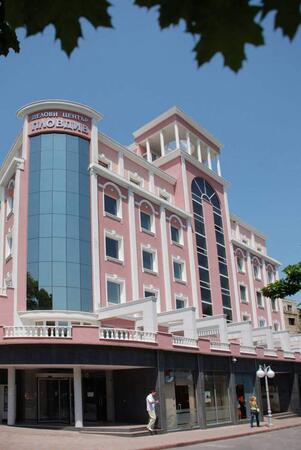
Business Center Plovdiv
Han Kubrat St 1, Plovdiv, Bulgaria, 4017
This is the most modern business center in the city, with all the necessary functionalities, while being located in a green part of the city.
It is about 20 minutes by bus from the main train station as well as the city center.
This instructor-led, live training in Plovdiv (online or onsite) is designed for developers who wish to learn and use Livewire to build modern and dynamic application interfaces.
By the end of this training, participants will be able to:
Build secure PHP applications in Plovdiv by mastering injection prevention, session management, and advanced vulnerability mitigation. This course covers client-side security, cryptography, and hardening practices, ensuring your code resists modern Internet attacks and meets industry standards.
This instructor-led, live training in Plovdiv (online or onsite) is designed for intermediate PHP developers who want to effectively apply design patterns within their projects.
Upon completion of this training, participants will be able to:
Grasp the purpose and advantages of using design patterns.
Identify and implement suitable design patterns for common scenarios.
Organize PHP applications following industry-recognized best practices.
Integrate patterns into modern frameworks such as Symfony or Zend.
This instructor-led, live training in Plovdiv introduces the fundamental concepts of Laravel and guides participants through the creation of a Laravel-based web application.
This instructor-led, live training in Plovdiv (online or onsite) is designed for web developers who wish to use Laravel and Vue JS for full-stack web development.
By the end of this training, participants will be able to:
Tailored for professional developers, this 21-hour module on Plovdiv examines design patterns and refactoring methodologies. Through interactive sessions, learners will master GoF patterns, enterprise architecture, and essential tools to craft high-performance, maintainable PHP applications.
This instructor-led live training (available online or on-site) is aimed at web developers who wish to build middleware and web services in Laravel.
By the end of this training, participants will be able to:
Use Laravel PHP Artisan to generate code and components.
Build RESTful APIs in Laravel that can browse, read, edit, add, and delete.
Filter and sort results based on URL parameters using RESTful APIs.
Read more...
Last Updated:
Testimonials (5)
Training style and the overall knowledge of the trainer.
Kenosi - NWK Limited
Course - Laravel: Middleware Development
The lessons was very interactive and the excersices was good practical
Heino - NWK Limited
Course - Laravel and Vue.js
he was explaining and giving numerous examples to make us understand
Selina - NWK
Course - Laravel PHP Framework
I genuinely enjoyed the real life examples.
Marios Prokopiou
Course - Secure coding in PHP
I like the support of the trainer and the topics. I came in with a mindset thinking this will be nothing new that I haven't done. But I was surprised of what all I have learned throughout this course. Thank you.
Online PHP training in Plovdiv, PHP training courses in Plovdiv, Weekend PHP courses in Plovdiv, Evening PHP training in Plovdiv, PHP instructor-led in Plovdiv, PHP trainer in Plovdiv, PHP private courses in Plovdiv, PHP boot camp in Plovdiv, PHP instructor in Plovdiv, PHP on-site in Plovdiv, Evening PHP courses in Plovdiv, PHP classes in Plovdiv, Online PHP training in Plovdiv, Weekend PHP training in Plovdiv, PHP instructor-led in Plovdiv, PHP one on one training in Plovdiv, PHP coaching in Plovdiv