Thank you for sending your enquiry! One of our team members will contact you shortly.
Thank you for sending your booking! One of our team members will contact you shortly.
Duration 24 hours
Course Outline
Introduction to Design Thinking
- Defining Design Thinking
- The critical importance of human-centered design
- The history and evolution of Design Thinking
- Real-world applications and case studies
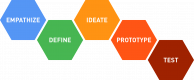
Phases of Design Thinking
- Empathize: Gaining insight into user needs
- Define: Articulating the problem statement
- Ideate: Generating innovative solutions
- Prototype: Creating tangible models
- Test: Validating solutions and iterating
Design Thinking Techniques and Tools
- User research methods (interviews, surveys, observations)
- Empathy mapping and journey mapping
- Brainstorming and mind-mapping techniques
- Prototyping tools and techniques
- Feedback loops and iteration processes
Application of Design Thinking in the Workplace
- Leveraging Design Thinking to address internal organizational challenges
- Enhancing team collaboration and creative problem-solving
- Optimizing processes and increasing efficiency
- Integrating Design Thinking into product and service innovation
Final Workshop and Assessment
- Group project: Applying Design Thinking to a real-world challenge
- Presentation and feedback session
- Final exam to evaluate acquired knowledge
Summary and Next Steps
Requirements
- Fundamental knowledge of business processes and problem-solving techniques
- Proven experience collaborating in teams and cross-functional projects
Target Audience
- Business professionals
- Project managers
- Innovation and strategy specialists
- Product developers